Why Winter Is the Best Time to Show Your Awning Some Love
It might feel a bit backwards to think about your awning just as the cold sets in and you’re heading indoors. But in the United Kingdom, where wind, rain and the odd surprise frost are regular visitors, winter is exactly when your awning needs the most attention.
A bit of care now can stop mould, stains, mechanical issues and costly repairs later. And when that first warm spring weekend arrives, you’ll be smugly sitting under a ready-to-use awning instead of wrestling with a stuck mechanism or a green, mossy fabric.
This guide walks you through cleaning, checks, and how to pack down or protect your awning and outdoor space so everything survives winter in great shape.
Step One: Give Your Awning a Proper Pre-Winter Clean
Before you even think about closing or covering your awning, it needs a good clean. If you trap dirt, bird droppings or damp leaves in the fabric and folds, they’ll happily sit there all winter causing stains, odours and mildew.
Start by brushing off loose debris with a soft broom or brush. Pay attention to the top of the fabric where leaves and twigs like to collect. Then, using lukewarm water and a mild soap solution, gently sponge the fabric from top to bottom.
Remember to avoid harsh chemicals and pressure washers – they can strip protective coatings or damage stitching.
Rinse thoroughly with clean water and, most importantly, allow the awning to dry completely before retracting it. In the UK’s damp climate, that might mean choosing a dry, breezy day or doing it in stages. A little patience here saves a lot of hassle later.
Step Two: Check the Frame, Fixings and Moving Parts
Once the fabric is sorted, turn your attention to the hardware. The metalwork is what keeps everything safe, secure and working smoothly when the wind picks up.
Take a slow walk around the awning and look for rust spots, flaking paint, bent arms or loose bolts. Gently test the brackets that attach to the wall – any wobble is a red flag that needs attention. If you notice cracks in the masonry or movement in the fixings, get a professional to inspect it before winter storms arrive.
For manual awnings, check the winding mechanism and handle for stiffness or grinding noises. For electric awnings, extend and retract them fully and listen out for unusual sounds. A light spray of silicone-based lubricant on the moving joints (not the fabric) can keep things gliding smoothly.
Think of this as an MOT for your awning – small tweaks now help avoid emergency repairs in January.
Step Three: Decide – Retract, Cover or Remove?
How you “winterise” your awning depends on its type and how exposed your home is.
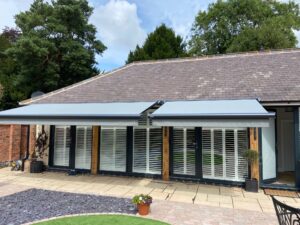
If you have a retractable awning: fully retract it once it’s clean and dry. Many UK homeowners then add a fitted cover or hood cassette to shield the fabric and mechanism from the worst of the weather.
If your property is in a particularly windy or coastal location, a cover is almost essential to protect against driving rain and salty air.
For fixed-frame or pergola-style awnings: removable fabric sections, side panels or valances should be taken down, cleaned and stored indoors in a dry, well-ventilated space. Avoid stuffing fabric into airtight plastic bags – breathable storage (like cotton bags or simply folded in a cupboard) helps prevent musty smells and mould.
If your awning is older or already showing signs of wear, winter can be a good time to book in a professional inspection or start planning a replacement in time for spring.
Outdoor Furniture and Flooring: Don’t Forget the Rest of the Space
Your awning is only part of the story. The area underneath it also benefits from a winter check-up.
Clean and, if possible, store outdoor cushions and textiles indoors. Even “weatherproof” fabrics will last longer if they’re not sat in a damp British garden from November to March. Wipe down furniture with a suitable cleaner and either move it into a shed/garage or use well-fitted, breathable covers.
For decking and patios, sweep away leaves and standing water regularly. These aren’t just ugly – they’re slippery and can encourage algae growth. If you’ve got an awning permanently shading a section of decking, this area is even more prone to staying damp, so treating it with an anti-slip cleaner or algae remover before winter is a smart move.
Little Extras: Cables, Sensors and Safety Checks
Modern awnings often come with extras – wind sensors, lights, heaters or integrated electrics. These bits are easy to forget until something stops working.
Check that any cables are secure, protected and not sitting in pooled water. If your awning has built-in lighting, give the fittings a quick clean and check for any cracked casings or moisture inside. For awnings with wind or sun sensors, gently wipe the sensor surface so it can do its job properly.
If you’re unsure about the safety of any electrics – especially in older installations – get a qualified electrician or awning specialist, like our team at Fraser James Blinds, to take a look. It’s not worth taking risks with outdoor wiring in a wet climate.

Planning Ahead: Make Spring Set-Up Effortless
Winterising isn’t just about surviving the cold months; it’s about making your life easier when the warm weather returns. A couple of simple habits now can make your spring set-up almost effortless.
Label any removed parts or storage bags so you’re not guessing what goes where in March. Keep any small brackets, screws or fittings in a clearly marked box. If you spot anything that will need repairing or replacing, note it down or take a quick photo on your phone so you remember to book it in before the first heatwave.
You might also use winter to browse new awning accessories – side screens for extra shade, upgraded fabrics, or smart controls that automatically retract your awning in high winds. Planning in the off-season often means better availability and less rush.
A Winter Investment That Pays Off in Summer
It’s easy to ignore your awning once the garden furniture is stacked and the barbecue is back in the shed. But a couple of hours of cleaning, checking and prepping now is a genuine investment in comfort, safety and longevity.
By winterising your awning and outdoor space properly, you’re not just protecting fabric and metal – you’re making sure that, when the first warm, sunny day rolls round, all you have to do is press a button or turn a handle and enjoy your outdoor living space straight away.
Future you, sipping a cold drink under a perfectly working awning in May, will be very grateful you got ahead of the weather.
Should you have any questions or would like any additional information about any of our product ranges, please feel free to contact our team. Alternatively, you can also arrange a home visit at a time that works best for you within one of the vast areas we cover.