Awnings for Spring & Summer in the UK: A Practical Buyer’s Guide
If you’ve ever set up a garden table with big summer energy only for the sky to switch moods in ten minutes, you already understand why awnings are so popular in Britain.
In the United Kingdom, an awning isn’t just a nice-to-have for a sunny day. It’s a way of taking back a bit of control over an unpredictable forecast, so you can actually use your patio more than three times a year.
The trick is choosing an awning built for British conditions, not just one that looks good in a showroom photo.
Decide what you want it to do before you look at styles
The biggest mistake people make is buying an awning without being clear on the job it needs to do.
Some households mainly want UV shade so the patio doors and indoor space stay cooler in the afternoon. Others want a comfortable dining area outside, even when the sun drops lower or there’s light drizzle. A lot of people, realistically, want both.
Once you know your main goal, it becomes much easier to choose the right size, projection, fabric, and whether motorisation and sensors are worth it.
Manual or motorised: the British weather makes the decision for you
Manual awnings can be great for smaller spaces or tighter budgets, and there’s something satisfying about the simplicity of a crank handle that never needs charging. But British weather changes quickly, and the moment you can’t be bothered winding it back in is usually the moment the wind picks up.
Motorised awnings tend to suit UK living because you can retract them instantly and you can add sensors that automatically protect the awning when you’re busy, distracted, or not at home.
If you’re investing in a larger awning that you plan to use often, motorised usually feels like the “why didn’t we do this sooner” option.
Wind classes: the number you should care about most
In the UK, wind is the real test. Not sun, not rain, not even the occasional heatwave. Wind. This is where wind class ratings matter because they give you a sense of how robust the arms, frame and overall structure are under pressure.
A higher wind class generally suggests a sturdier system, but it’s not a licence to leave the awning out in rough conditions. Think of it like an umbrella: a good one lasts longer and handles more, but you still don’t fight a storm with it out of stubbornness.
If your garden is exposed or you live on a corner plot where the wind seems to have opinions, prioritise strength and consider awning accessories, like wind sensors, as non-negotiable.
Rain and the water run-off angle: the detail that stops the “puddle surprise”
Awnings can help with light rain, but only if water has somewhere to go. The key is the pitch, meaning the angle of the awning when extended.
If the pitch is too flat, water pools in the fabric, adds weight, strains the arms and can stretch the material over time. Worse, it can suddenly dump a heavy sheet of water right onto the people, furniture, or BBQ underneath.
In practice, if you want rain protection, you need an awning that allows an adjustable pitch and an installation setup that gives enough fall for water to run off safely. This is one of those “small detail, massive difference” moments.
UV protection isn’t just about comfort, it’s about durability too
When the sun does show up, it can be surprisingly strong, and good awning fabric matters more than people expect.
A quality fabric helps block UV, reduces glare, and also keeps the awning looking decent over the years rather than fading fast. Colour plays a role here too. Darker colours can feel more shaded underneath and reduce glare, but may show fading sooner.
Whereas, lighter colours look bright and airy, but are less forgiving when it comes to marks from pollen, dust, or that classic UK combo of BBQ smoke plus a random gust of wind. The most practical choice is often a mid-tone that balances looks with real-life mess.
Cassette designs: full protection vs “it’ll probably be fine”
The cassette is the housing that the awning retracts into, and it’s a bigger deal in Britain than in sunnier climates.
A full cassette protects the fabric and arms from rain, grime, bird mess and general weathering, which means less cleaning and a longer lifespan. Semi-cassettes offer partial protection and can be a good compromise.
Open systems can work in very sheltered locations, but they’re more exposed to the elements, which makes them a riskier choice if your awning faces regular wind and rain. If you want an awning that stays looking good without turning into a maintenance project, full cassette is usually the sensible long-term bet.
Sensors: the best way to “British weather-proof” your investment
Sensors are where an awning stops being a manual accessory and starts feeling like a proper system.
A wind sensor is the standout because it can retract the awning automatically when the wind hits a set level, which is ideal for those moments when you’re out, you’re on a call, or you simply don’t notice the breeze has turned into a full performance.
Sun sensors add comfort by extending the awning when sunlight is strong, keeping the patio usable and the indoors cooler. Rain sensors can be helpful, but they’re often misunderstood; depending on the setup, a rain sensor may retract the awning to protect it, because many awnings aren’t designed to sit extended through heavier rainfall.
In UK terms, wind plus sun sensors are the usual winning combo, with rain handled thoughtfully based on the awning’s capability and your expectations.
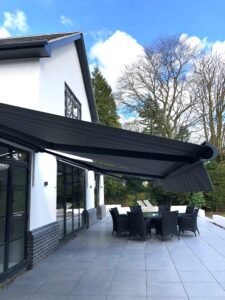
Size and projection: shade depends on where the sun goes, not where you wish it went
Choosing size isn’t just about covering furniture; it’s about understanding how the sun moves across your garden.
An awning might shade perfectly at 1pm and feel completely useless at 6pm if the sun drops lower and comes in from the side. This is why it helps to think about how you use the space across the day, especially if you like evening meals outdoors.
Projection also matters because the further the awning extends, the more surface area there is for wind to push against. Bigger can be better, but only if the structure, fixings and sensor setup are right for it.
Installation and fixings: the unglamorous part that makes everything safe
An awning is only as strong as what it’s attached to, and this is where professional installation matters.
Brick, blockwork and rendered surfaces each require different fixing approaches, and the right anchors and installation methods are critical for stability. A cheap quote can sometimes mean corners are being cut on fixings, preparation, or safety checks.
If you’re investing in a decent awning, it’s worth making sure the installer is treating it like a structural fit, not like hanging a picture frame. Done properly, it feels rock solid and gives you confidence using it.
Maintenance: keep it simple so you actually enjoy owning it
The good news is that awnings don’t need constant attention if you buy sensibly. Light cleaning, brushing off debris, and avoiding retracting it soaking wet whenever possible will keep it in good condition.
A full cassette helps massively because it protects the awning when it’s not in use. The main habit to build is simply retracting in wind and not treating it like a year-round shelter in heavy rain.
Used properly, it should feel like a comfort upgrade, not a new chore on your weekend list.
The bottom line: buy for Britain, not for holiday vibes
Awnings are brilliant in the UK when you buy with the right priorities. If you focus on wind rating, water run-off angle, quality fabric, and smart sensors, you’ll end up with something that genuinely changes how often you use your outdoor space.
The goal isn’t to pretend you live in the south of Spain; it’s to make your patio work in Britain, where the weather rarely sticks to one mood for long. Buy with that mindset and your awning becomes one of those purchases that quietly improves your day-to-day life, from spring right through to late summer.
If you have any questions about our ranges of awnings, then please feel free to contact us. We are always more than happy to help. Alternatively, you can also arrange a home visit within the vast areas we cover, at a time that works best for you.