Spring-Ready Bi-Fold & Patio Door Blinds: Best Options for Light, Privacy and Smooth Operation
Spring has a funny way of making you fall back in love with your home, right up until the sun starts pouring through your patio doors at the exact angle that turns your living room into a greenhouse.
One minute you’re enjoying the brightness, the next you’re squinting through breakfast, your screen has glare, and you suddenly realise your neighbours can see far more of your day-to-day life than you ever intended.
Door blinds are meant to solve that, but with bi-folds and sliders, picking the wrong thing can turn into daily irritation. The goal isn’t just “nice blinds”, it’s blinds that work smoothly with the doors you actually use.
Why doors are always more complicated than windows
Unlike windows, doors are constantly in motion and they get handled a lot. That means any blind choice has to respect how people move through the space, how often the doors open, and what’s sticking out of the door itself.
Handles are the usual troublemakers because they can catch fabric or clash with headrails, especially if the blind sits too proud of the glass. Add in the fact that bi-fold doors stack, sliders overlap, and French doors swing into the room, and you can see why a blind that looks great on a window can feel completely wrong on a door.
Handles, clearance and the “snag test”
Before you even think about style, it helps to imagine your busiest moment of the day: you’ve got a drink in one hand, you’re opening the door with the other, and someone’s walking behind you. That’s where blinds fail if they’re bulky or loose.
If the blind sticks out too far, the handle rubs against it every time you use the door. If the fabric isn’t tensioned or controlled, it can sway into the path of the door and get caught.
The best door blind setups pass what is called the “snag test”: nothing dangles into the handle area, nothing bunches up where the door moves, and nothing needs you to think about it every time you open the doors.
Bi-fold doors need blinds that respect the stack
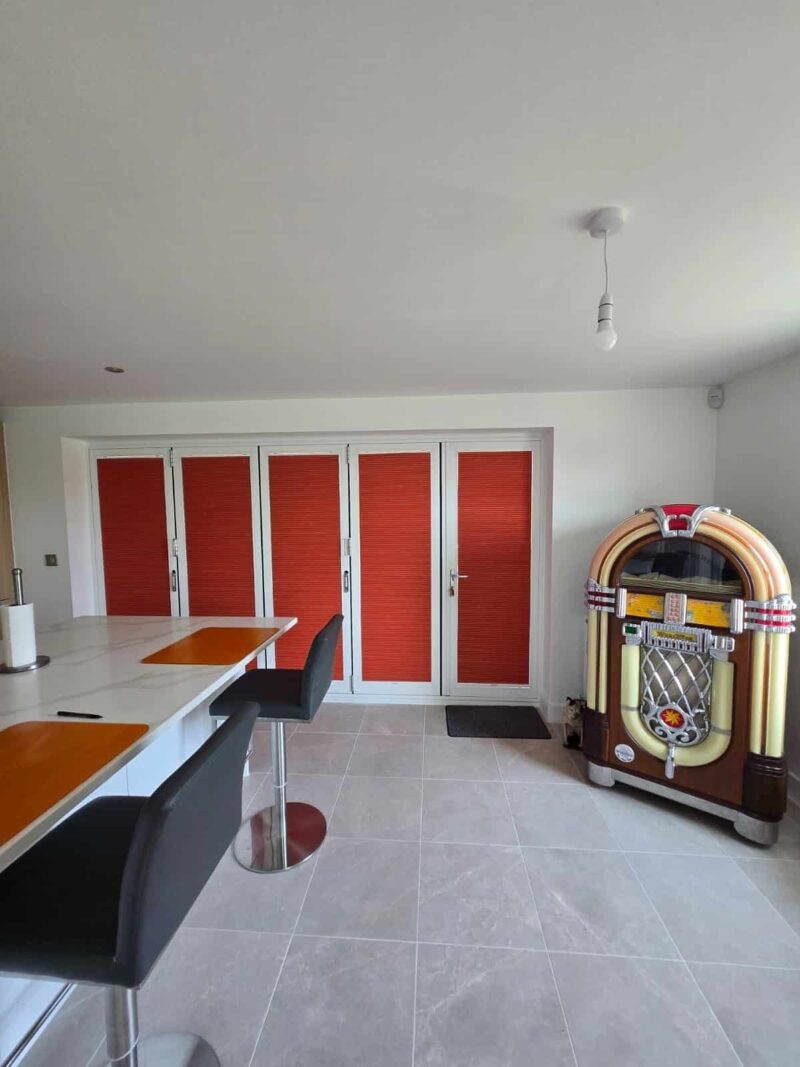
Bi-fold doors are brilliant for opening up a room, but they’re also the most demanding when it comes to blinds because of the stacking panels.
This is where slim, close-to-glass systems really shine. Frame-fitted options, like Perfect Fit-style blinds, are popular because they sit neatly within a frame and move with the door, so they don’t flop around or intrude into the stacking space.
Pleated and cellular (duette) fabrics are especially good here because they give you gentle light control without needing bulky hardware, and they’re easy to adjust when spring light shifts hour to hour.
Bi-folds and the “privacy without gloom” trick
If your bi-folds are overlooked, spring can feel like a trade-off: either you have light or you have privacy.
The best way around that is a setup that lets you bring in daylight without putting your whole life on display. Top-down/bottom-up pleated designs are a great example because they allow you to cover the lower half for privacy while still letting light in from the top.
It’s the sort of solution that feels genuinely made for real homes, especially if you’re dealing with morning sun and busy family routines.
Sliding patio doors suit wide-span solutions
Sliding patio doors usually mean you’re covering a broader opening, and the win here is choosing something that glides as smoothly as the door itself.
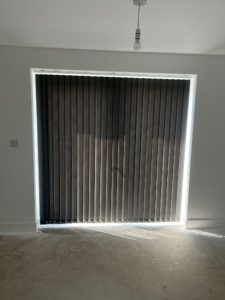
Panel glide blinds are ideal for modern spaces because they stack neatly to one side, look clean, and cope well with large spans without getting messy. If you want something more classic and flexible, vertical blinds are still one of the most practical choices because they let you tilt light away while keeping the room bright.
Roller blinds can work too, but they need the right clearance around handles and a fabric that suits spring glare, otherwise you’ll either block too much light or still feel like you’re living inside a spotlight.
French doors are all about swing clearance
French doors are a different type of challenge because they swing open into the room and you typically have two handles to deal with. The main priority is keeping everything close to the glass so nothing flaps as the doors move.
Frame-fitted blinds can be a really tidy solution here because they open and close with the doors, staying aligned instead of floating about. Another popular approach is fitting a separate, slim blind to each door leaf, which gives you independent control and makes everyday use feel natural, especially if you often open just one side.
The spring fabric choice that makes everything feel easier
Even with the perfect mechanism, the fabric you choose can make or break how the room feels in spring.
Light-filtering fabrics are great if you want the space to stay bright while taking the harsh edge off direct sun. Screen-style fabrics can be brilliant during the day because they reduce glare and improve daytime privacy while still letting you enjoy the sense of openness.
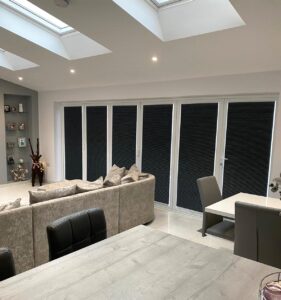
Blackout fabrics have their place too, especially if the doors face low evening sun and your room turns into a glowing fish tank at sunset, but for most spring daytime living, softer filtering options tend to feel more natural.
Child-safety should feel built-in, not bolted-on
Door blinds sit right where kids run, climb, and pull at things, and it’s far easier if safety is part of the design from day one.
Cordless systems, wand controls, or motorised blinds remove the main risks and also make daily use smoother because there’s nothing to tangle or snag.
If you’ve ever tried to open a door quickly while a chain control is swinging about, you’ll understand why “safe” and “convenient” often end up being the same decision. When blinds are in a high-traffic area, simpler operation isn’t just nice, it’s practical.
Pet-proofing is really about durability and wipeability
If you’ve got pets, especially ones that treat the garden door like their personal entrance to the universe, you’ll want something that can take a little chaos.
Materials that wipe clean are your best friend because spring means muddy paws, pollen, and more in-and-out movement. Tighter weaves tend to snag less, and systems that sit neatly rather than dangling are less tempting for cats and less likely to get nudged out of shape by dogs.
Motorised options can also reduce the temptation for pets to interact with controls, which can be a surprisingly big win in busy homes.
Condensation and ventilation are the hidden spring issue
Spring brings temperature swings, and that can cause condensation on glass, especially in the mornings or after cooking and showers.
Blinds can influence this because anything sitting very tight to the glass can reduce airflow and make moisture hang around longer. The trick is choosing materials and habits that support ventilation rather than trapping damp against the window.
Lighter fabrics and designs that don’t seal the glass completely can help, and it’s worth occasionally leaving a small gap or opening the blind slightly during high moisture periods to encourage air movement.
Simple habits that stop damp becoming a nuisance
If you notice condensation, it’s best to deal with it quickly rather than hoping it will magically disappear without leaving marks. A quick wipe in the morning makes a difference, and keeping vents open helps regulate moisture levels.
In rooms that get humid, choosing moisture-resistant fabrics can help keep blinds looking fresh, especially around doors that get used heavily.
It’s one of those things you don’t think about when you’re picking blinds, but you’ll be glad you did the first time spring throws a cold morning and a warm afternoon at you within the same day.
The “smooth operation” rule that stops regret
The most reliable way to avoid blind regret is to judge everything against one simple rule: will this let you use your doors normally, every day, without thinking about it?
If the blind respects the handles, stays clear of stacking panels, doesn’t swing into the traffic flow, and gives you easy light control, you’ve basically nailed it. Spring is meant to feel light and easy, and your blinds should support that rather than turning every door opening into a tiny battle you didn’t ask for.
The calm conclusion: bright, private, and hassle-free
Door blinds don’t need to be complicated, but they do need to be chosen with real life in mind. Once you focus on clearance, movement, and daily use, the best option usually becomes obvious.
The payoff is huge: soft spring daylight when you want it, privacy when you need it, and doors that still open smoothly without snagging, catching, or forcing you into weird workarounds.
That’s what “spring-ready” really means – your home feels brighter, but everything still works exactly as it should.
If you would like any more information about the ranges of blinds at Fraser James Blinds, then please don’t hesitate to contact our professional team. We are always more than happy to help. Alternatively,you can also arrange a home visit from us at a time that works best for you.
You may also be interested in...
A Guide to DIY and Professional Installation of Blinds and Shutters
Read More
5 Stylish Alternatives to Plain Roller Blinds
Read More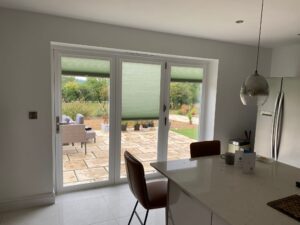
A Guide to Cleaning your Blinds
Read More
A Comprehensive Guide to Refreshing Your Blinds and Shutters for Spring
Read More