Faux Wood vs. Real Wood Shutters in Winter: The UK Homeowner’s Checklist
If you’ve ever woken up on a cold January morning, pulled back the curtains and found droplets of water running down your windows, you’re not alone.
UK homes are notorious for winter condensation, steamy kitchens, and bathroom mirrors that stay foggy for ages. So when it comes to choosing between faux wood and real wood shutters, it isn’t just a style decision – it’s a durability and moisture one.
This is your no-nonsense, homeowner-friendly guide to which shutters actually hold up when the weather turns damp, cold and relentlessly British.
Why Winter Makes Shutter Choice So Important
In summer, almost any shutter looks and behaves well. Windows are open more, humidity is lower, and you’re not fighting daily condensation. Winter is when materials are really tested.
Central heating goes on, windows stay shut, and the difference between warm indoor air and cold glass skyrockets. That’s when condensation forms, especially on older or poorly insulated windows.
If your shutters are made from the wrong material – or not properly finished – you can end up with warping, swelling, peeling paint, or even mould.
So the question isn’t just, “Which shutters look nicer?” It’s, “Which shutters still look great after five winters in a steamy bathroom or a busy family kitchen?”
Understanding Moisture, Humidity and Condensation in UK Homes
Condensation happens when warm, moist air indoors meets cold surfaces like glass or uninsulated window frames and cools rapidly. The excess moisture in the air turns into water droplets on the cold surface.
Add to that everyday life: boiling pasta, drying clothes on radiators, hot showers with the door open, and kettles that never get a day off. All of this pumps extra moisture into your home. In winter, it has nowhere to go.
Shutters sit right in that danger zone – close to cold glass, near window frames, and often in rooms with the most moisture. That’s why their material and finish matter more in a United Kingdom winter than most people realise.
What Are Faux Wood Shutters Made Of?
Faux wood shutters are usually made from PVC, composite materials, or engineered products designed to look like timber without behaving like it. They’re sometimes called vinyl shutters or composite shutters, depending on the brand.
The big appeal is that they are moisture-resistant rather than moisture-sensitive. The surface doesn’t absorb water, and the core is usually stable even in humid conditions.
In practical terms, this means that if you get condensation on your windows or a build-up of steam in your bathroom, faux wood shutters are much less likely to swell, crack or warp over time.
Good-quality faux wood shutters also come with a realistic grain effect or smooth painted finish, so from a distance – and often even close up – you still get that “timber shutter” look without the stress of real wood in damp conditions.
How Real Wood Shutters Behave in Cold, Damp Weather
Real wood shutters are usually made from hardwoods or specially treated timber. They’re beautiful, tactile, and light, and they add a warmth and character you can really feel in a room.
But wood is a natural, porous material. It reacts to changes in temperature and humidity. In winter, when moisture levels go up and down depending on whether the heating is on, windows are open, or showers are running, wood can expand and contract slightly.
Over time, if the shutters aren’t properly sealed or are used in very damp rooms, that movement can lead to:
- Subtle warping or twisting of louvres.
- Hairline cracks in paint or stain finishes.
- Swollen panels that don’t close as smoothly.
In well-ventilated, less humid rooms – think living rooms, bedrooms, lounges and home offices – real wood shutters are usually absolutely fine and can last for many, many years. They just don’t like being constantly hit with steam and condensation.
Moisture-Prone Zones: Kitchens, Bathrooms and Utility Rooms
Kitchens and bathrooms are where the winter battle with moisture is fiercest. Boiling pots on the hob, dishwashers releasing steam, hot baths and showers – it all adds up.
In these rooms, your shutters are closer to moisture than you might think. Steam rises and clings to surfaces, including shutter louvres and frames. Condensation forms on the window, then sometimes drips onto the bottom rail of the shutter.
Over months and years, this is what separates materials that “cope” from those that “complain”.
In most UK homes, the safe bet for these moisture-heavy rooms is faux wood. It’s more forgiving if you forget to open the window after a shower or don’t wipe down condensation every morning.
Real wood can be used if it’s very well sealed and the room is well ventilated, but it demands more care and a bit more discipline.
Durability Checklist: Faux Wood Shutters in Winter
If you’re trying to work out whether faux wood shutters are right for you, think of this as your winter durability checklist.
First, ask yourself how bad your condensation actually is. If your windows regularly drip in the morning and you live in a typical UK semi with older glazing or single-glazed sash windows, faux wood will almost always be the safer, longer-lasting option in kitchens and bathrooms.
Second, consider how your household uses those rooms. Busy family home with teenagers taking long hot showers? Constant cooking, baking and boiling? Faux wood will give you more peace of mind and less maintenance.
Third, think about cleaning. Faux wood shutters are usually simple to wipe down with a damp cloth. If water or mild cleaning products touch the surface regularly, they won’t absorb moisture or stain easily. That makes them ideal for homes where practical cleaning beats delicate care.
Finally, look at the temperature swings. In rooms that go from chilly to hot quickly – like a bathroom that stays unheated until the shower goes on – faux wood copes brilliantly because it doesn’t expand and contract like timber.
Durability Checklist: Real Wood Shutters in Winter
Real wood shutters still have a strong place in UK homes – you just need to put them in the right spots.
Start by thinking about room function. In living rooms, dining rooms, bedrooms and studies, you’re unlikely to face constant high humidity. These are perfect zones for real wood. You’ll get that beautiful grain, lighter weight panels, and often a slightly more refined feel.
Next, check your glazing and ventilation. If you’ve got modern double or triple glazing with good insulation and minimal condensation, real wood shutters will generally stay stable even in winter, as long as you’ve got adequate ventilation.
Then, think about your own maintenance style. Real wood might need a bit more love over the years – maybe a gentle clean with appropriate products, and occasionally checking that the finish is intact, especially on edges and joints. If you’re the sort of homeowner who likes to look after your interiors carefully, real wood can be incredibly rewarding.
Finally, consider where you shouldn’t put them. Real wood right next to a power shower, over a kitchen sink that’s constantly used, or in a small, unventilated bathroom will always be more at risk of swelling or surface damage over time.
Energy Efficiency and Warmth: Do Materials Matter?
Both faux wood and real wood shutters can help keep your home warmer in winter by adding an extra insulating layer over the glass. Closed louvres trap a pocket of air between the shutter and the window, which can reduce draughts and heat loss.
From a thermal perspective, the difference between faux and real wood is often smaller than people expect. The key factor is how well the shutter fits and how often you use them correctly – closing them on cold nights, opening them during sunny winter days to let warmth in.
So when it comes to warmth, choose the material based more on moisture behaviour than tiny theoretical differences in insulation. Both can play a big part in making rooms feel cosier and cutting that “cold window” sensation.
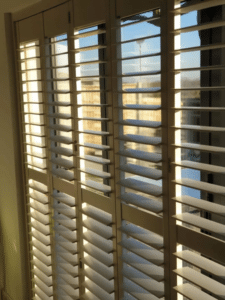
Style, Finish and Everyday Maintenance
For many homeowners, style still matters as much as practicality – and that’s fair.
Real wood shutters have a natural charm and character that’s very hard to fake. The grain, the way light hits the surface, and the feel when you run your hand along the louvre all contribute to that premium look.
Faux wood shutters have come a long way, though. High-quality versions often look almost identical to painted timber, especially in white or neutral finishes. In a bathroom or kitchen, you get most of the aesthetic benefits with fewer worries about the environment they’re in.
Maintenance is where faux wood tends to win in winter. A quick wipe with a damp cloth is usually all they need, and you don’t have to stress about the odd splash or persistent condensation.
Real wood needs slightly gentler handling and a bit more awareness about not letting moisture sit on surfaces.
Which Shutter Material Is Right for Your Home This Winter?
A simple way to decide is to walk around your home and assess each room individually, rather than choosing one material blindly for every window.
For bathrooms, cloakrooms, en-suites, utility rooms and heavily used family kitchens, faux wood shutters are usually the clear winner. They’re built to cope with humidity, condensation and everyday splashes without complaining.
For lounges, bedrooms, dining rooms, bay windows and home offices, real wood shutters can be a brilliant choice, bringing warmth, elegance and a slightly more luxurious feel, especially if your condensation is minimal.
If in doubt, think long term. Ask yourself, “What will these shutters look like after ten winters in this room?” If the honest answer makes you nervous with real wood, that’s your sign.
When a Mixed Approach Works Best
You don’t have to be loyal to one material across the whole house. Many UK homeowners go for a mixed solution: faux wood in all moisture-prone rooms and real wood in all the dry, everyday living spaces.
From the outside, the look is typically consistent – the shutters are matched in colour and style – but behind the scenes, each room gets the material that suits its environment best. That way, you get durability where it’s needed and character where you’ll enjoy it most.
In a country where winter seems to last half the year and condensation is part of the deal, choosing between faux wood and real wood shutters isn’t about fashion – it’s about how your home really lives. Get the material right for each room, and your shutters will not only look beautiful this winter, but for many winters to come.
If you would like any additional information about any of our ranges of shutters, or blinds, then please feel free to contact the Fraser James Blinds team. We are friendly, yet professional, and always on hand to help. Alternatively, you can also arrange a home visit in one of the vast areas we cover.