Blackout Blinds, Thermal Blinds or Shutters: What Should You Choose for Summer Bedrooms?
Summer bedrooms can be surprisingly tricky to get right.
During the day, you want your home to feel bright, fresh and full of natural light. But when it comes to bedtime, especially during long July evenings, bright mornings and warmer nights, that same sunshine can quickly become the enemy of a good night’s sleep.
Anyone with children will know the struggle. It is 8.30pm, the room is still glowing like mid-afternoon, and someone is insisting they are “not tired” because, technically, the sun agrees with them.
Adults are not immune either. Early morning light, heat build-up, glare, stuffy bedrooms and broken sleep can all make summer feel less relaxing than it should.
That is where the right window dressings make a real difference. Whether you are looking at blackout blinds, thermal blinds, shutters or a combination of options, the best choice depends on the room, who uses it, how much sunlight it gets and what you want the space to feel like.
So, let’s break it down properly.
Why Summer Bedrooms Need a Bit More Thought
In autumn and winter, most people think about warmth, privacy and cosiness. In summer, the priorities change slightly. You still want privacy and comfort, but you also need to think about light control, heat management and sleep quality.
Bedrooms can heat up quickly during the day, especially if they face south or west. Rooms with large windows, roof windows or patio doors can feel particularly warm by bedtime.
Then there is the issue of early sunrise. In the United Kingdom, summer mornings can get bright very early, which is not always ideal when you are trying to keep children asleep past 5am or enjoy a lie-in at the weekend.
This is why choosing the best bedroom blinds is not just about colour or style. It is about how the room actually works.
Blackout Blinds: Best for Blocking Light
Blackout blinds are one of the most popular choices for bedrooms, and for good reason. Their main job is simple: reduce light as much as possible.
They are especially useful in children’s bedrooms, nurseries, shift workers’ bedrooms, guest rooms and any space where sleep quality is the main priority. If a room gets strong early morning sunshine, blackout blinds can make the room feel much calmer and more sleep-friendly.
For families, blackout blinds in the UK are particularly helpful during the school summer holidays. Children’s routines often shift, bedtimes become more flexible and the lighter evenings can make winding down harder.
A darker bedroom helps signal that it is time to sleep, even if the sky outside has other ideas.
Where Blackout Blinds Work Best
Blackout blinds are ideal for children’s bedrooms because they help create a darker, more settled environment. They are also a strong option for nurseries, where daytime naps can be affected by bright light.
If your baby or toddler is waking earlier in summer, the window dressing could be part of the issue.
They are also useful in adult bedrooms where light sensitivity is a problem. Some people can sleep through anything. Others wake the moment a thin line of sunlight creeps through the window. For those sleepers, blackout blinds can make a noticeable difference.
However, it is worth being realistic. A blackout fabric can block light through the blind itself, but tiny gaps around the edges may still allow some light in, depending on the blind style and how it is fitted. For maximum light control, made-to-measure fitting is important.
Thermal Blinds: Not Just for Winter
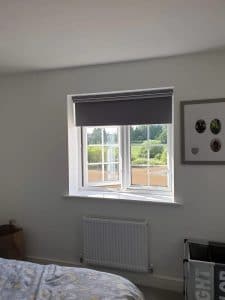
Thermal blinds often get associated with keeping heat in during winter, but they can also be very useful in summer. The right thermal blinds can help reduce heat transfer through the window, which means they can support a cooler bedroom during warmer months.
This is especially helpful for rooms that become hot and uncomfortable by the evening. If your bedroom gets direct sunlight for several hours a day, thermal blinds can help limit some of the heat build-up when kept closed during peak sunshine.
Thermal blinds summer benefits are often overlooked, but they can be a smart choice for bedrooms that need temperature support as well as privacy and light control.
Where Thermal Blinds Work Best
Thermal blinds are a strong option for south-facing and west-facing bedrooms, where afternoon and evening sunlight can make the room feel warm just when you want it to cool down.
They are also useful in loft rooms, attic bedrooms and rooms with larger windows. These spaces can be harder to keep comfortable because they often trap heat. Thermal blinds can help create a more balanced environment, particularly when combined with good ventilation.
They can also be helpful in guest bedrooms. If family or friends are staying over during summer, you want the room to feel comfortable without needing to overthink it. A thermal blind can help the space feel more practical all year round.
Shutters: Stylish, Practical and Great for Control
Shutters are a brilliant choice if you want something that looks elegant while giving you flexible control over light, airflow and privacy. Unlike a standard blind, shutters allow you to tilt the slats throughout the day, meaning you can reduce glare without fully darkening the room.
This is particularly useful in bedrooms that are overlooked by neighbouring homes or street-facing windows. You can maintain privacy while still letting natural light in.
Shutters also have a timeless look. They suit modern homes, period properties, family bedrooms and calm guest spaces. They are not just a functional choice; they can change the whole feel of a room.
Where Shutters Work Best
Shutters are ideal for main bedrooms where style matters as much as practicality. They give the room a polished, finished look and work well if you want something long-lasting.
They are also excellent for street-facing bedrooms. Instead of closing curtains or blinds completely, shutters let you angle the slats so you can enjoy privacy without making the room feel boxed in.
For older children’s bedrooms, shutters can be a good option too. They are sturdy, easy to clean and less fabric-heavy than some blind styles. However, for very young children or rooms where darkness is the top priority, you may still want to combine shutters with a blackout blind or curtain for better sleep support.

Blackout Blinds vs Thermal Blinds vs Shutters
So, which one should you choose?
If your biggest issue is light, go for blackout blinds. They are the most direct solution for bright evenings, early mornings and sleep disruption.
If your biggest issue is heat, look at thermal blinds. They can help reduce heat gain during the day and make bedrooms feel more comfortable by night.
If your biggest issue is privacy and flexible light control, shutters are a great choice. They allow you to adjust the room throughout the day without fully closing off the window.
Of course, real homes are rarely that simple. Many bedrooms need a bit of everything: less light, less heat, more privacy and a nicer overall look. That is why combining solutions can sometimes be the best approach.
The Best Option for Children’s Bedrooms
For children’s bedrooms, blackout blinds are usually the first place to start. Sleep is the main priority, especially during summer when routines can become harder to manage.
A blackout blind can help make bedtime feel more believable when it is still light outside. It can also support daytime naps for younger children and reduce early morning wake-ups.
For child safety, it is important to choose blinds that are properly fitted and designed with safety in mind. Cordless options, motorised blinds or systems with child-safe controls are worth considering, especially in nurseries and younger children’s rooms.
If the room also gets very warm, a thermal blackout blind could be a practical option because it combines light reduction with temperature support.
The Best Option for Main Bedrooms
For a main bedroom, the best choice depends on how you use the room.
If you want a calm, hotel-style feel, shutters can look beautiful and give you excellent privacy. If you are sensitive to light, you may prefer blackout blinds, either on their own or layered with curtains.
If your room gets hot in the evening, thermal blinds could be the better practical choice. They are particularly useful if the room faces the sun during the later part of the day.
A layered approach can work really well in main bedrooms. For example, shutters for privacy and style, with blackout curtains or blinds for deeper darkness when needed.
The Best Option for Guest Bedrooms
Guest bedrooms need to work for different people, which means flexibility is key.
A blackout blind is often a safe choice because it helps most guests sleep more comfortably. Not everyone is bothered by light, but very few people complain that a bedroom is too sleep-friendly.
If the room is only used occasionally, you may also want something low-maintenance and neat. Shutters can be ideal here because they look good even when the room is not in use and are easy to keep clean.
For a guest room that gets warm, thermal blinds are worth considering too. They can help the room feel more comfortable without needing fans running all night.
The Best Option for Loft Bedrooms
Loft bedrooms and converted attic spaces can become very warm in summer. They are often closer to the roof, more exposed to sunlight and harder to cool down.
For these rooms, thermal blinds are often the most practical starting point. They can help reduce some of the heat entering through the window, particularly during the hottest part of the day.
If the loft room is also used as a bedroom, blackout features are useful too. Roof windows can let in a lot of early morning light, so choosing a blind that offers both thermal and blackout benefits can make the room much more comfortable.
Do You Need Made-to-Measure Blinds?
For bedrooms, made-to-measure blinds and shutters are often worth it. Small gaps, poor fitting and the wrong fabric choice can make a big difference when you are trying to control light and heat.
A made-to-measure option helps ensure the window dressing suits the exact size and shape of the window. This is especially useful for bay windows, awkward bedroom windows, patio doors, roof windows and older homes where nothing is quite square.
It also means you can choose the right fabric, finish, colour and control system for the room, rather than trying to force a standard product to do a specialist job.
Final Thoughts: Choose Based on the Problem You Want to Solve
There is no single perfect window dressing for every summer bedroom. The right choice depends on what is making the room uncomfortable.
Choose blackout blinds if sleep and light control are the main priorities. Choose thermal blinds if the room gets too warm and needs better temperature support. Choose shutters if you want privacy, style and flexible control throughout the day.
For many homes, the best answer may be a combination. A child’s room might need blackout blinds. A main bedroom might suit shutters with added blackout layering. A loft room might benefit most from thermal blinds with blackout properties.
The key is to think beyond how the window dressing looks and consider how the room feels at bedtime, first thing in the morning and during the warmest part of the day. Get that right, and your summer bedrooms can feel cooler, calmer and much easier to sleep in.
Should you have any questions or would like any additional information about any of our ranges of blinds and shutters, then please feel free to contact our team. We are friendly, professional and always more than happy to help. Alternatively, you can also arrange a home visit at a time that works best for you.