
The Bespoke Wardrobe Planning Guide
Before you get excited about colours, handles, or that luxury glass-front finish, it’s worth taking a step back and thinking about how you actually live.
A bespoke wardrobe works best when it’s built around your day-to-day routine, not a perfect-looking showroom photo. The easiest way to start is by looking at what you own and how you use it.
If most of your clothes are shirts, dresses, blazers, and coats, you’ll need more hanging space. If you live in knitwear, gym sets, t-shirts, and denim, drawers and shelving will matter more than long rails.
It also helps to be honest about the chaos zones. If shoes end up scattered near the door, if belts and accessories live in random places, or if you’re constantly searching for “that one top”, those are clues your storage isn’t working for you.
A well-planned wardrobe isn’t just about fitting everything in; it’s about making everything easy to find and easy to put away without thinking too hard.
Choosing the Right Layout for Your Room
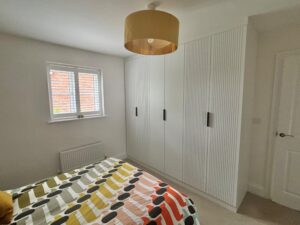
The layout is the foundation of the entire wardrobe. A straight run along one wall is the most common option and works brilliantly in standard bedrooms because it keeps the space feeling open while still giving you plenty of storage.
It’s also great if you want a clean built-in look that doesn’t dominate the room. With a straight run, the clever part is not the footprint, but how you divide the internal sections so that every centimetre has a purpose.
If you’ve got a corner that’s currently underused, an L-shape wardrobe can be a game changer. It takes a space that often becomes “dead area” and turns it into functional storage. The key is to plan the corner so it doesn’t become awkward or hard to reach.
Many people use that area for shelving or access-friendly storage rather than deep hanging rails that you’ll avoid using.
If you’re lucky enough to have the space, a U-shape layout across three walls can create a proper dressing-room feel. The benefit isn’t just the amount of storage, but the ability to create distinct zones, so your wardrobe feels more like a system.
A walk-in or dressing area works in a similar way, but it needs planning just as much as any other layout. Without zoning, walk-ins can quickly become a bigger room full of bigger mess.
Hanging Rails: Where Space Gets Won or Lost
Hanging space is usually the heart of a wardrobe, but it’s also where people waste space without realising it.
One long rail might look tidy on paper, but different clothing needs different heights. A tall hanging section is perfect for long dresses, coats, and anything that would crease if it were folded. Most wardrobes benefit from having at least one dedicated area like this, even if it’s just a single section at one end.
For everyday items like shirts, blouses, shorter jackets, and folded trousers, double hanging rails are often the best use of space. Having two rails stacked can effectively double your hanging capacity and keep everything visible and accessible.
This can be especially helpful in shared wardrobes, where each person can have their own section without the layout becoming complicated.
If your wardrobe includes high storage zones, pull-down hanging rails can make those areas genuinely usable instead of turning them into “out of sight, out of mind” zones. The point of bespoke design is to make storage work for you, and that includes making sure you can comfortably reach and see what’s stored where.
Drawers: The Secret to Keeping Things Looking Tidy
Drawers are where wardrobes go from “it fits” to “it functions”. They’re ideal for the items that typically cause mess because they’re small, folded, or constantly used.
Think t-shirts, gym wear, underwear, socks, pyjamas, and even folded knitwear. Without drawers, these items usually end up in piles on shelves, and piles have a habit of turning into chaos the second you’re in a rush.
The most useful drawer setups usually include a mix of shallow and deep drawers. Shallow drawers work beautifully for underwear, socks, and accessories because everything stays visible and you’re not digging around.
Deeper drawers are better for t-shirts, jeans, jumpers, and casual wear. If you add internal dividers, drawers become even more effective because each item has its own place, which means everything stays organised without constant effort.
Shelving: Brilliant When It’s Planned, Messy When It’s Not
Shelves can be a wardrobe’s best friend or its worst enemy, and the difference is planning. Shelving is great for folded clothes, handbags, hats, and storage boxes, but if shelves are too deep or too tall, they encourage messy stacks.
When you can’t see what’s at the back, you forget it exists, and then you end up buying duplicates or wearing the same few things over and over.
A good shelf plan matches shelf height to what you’re storing. Tighter shelves work well for folded t-shirts and knitwear. Taller shelves are better for handbags or storage boxes. It’s also worth having one or two “open” shelves that are intentionally designed to look nice, because it adds that built-in premium feel without needing anything overly fancy.
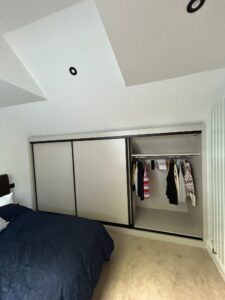
Shoe Storage: The Most Underrated Upgrade
Shoes are one of the quickest ways to make a room look messy, even when everything else is tidy. That’s why dedicated shoe storage can make such a noticeable difference. When shoes have a clear home, your wardrobe instantly feels calmer and more organised.
Angled shoe shelves are popular because they keep pairs visible and easy to reach, and they stop shoes falling over or getting hidden behind each other. Pull-out shoe racks work brilliantly in tighter spaces because they give you easy access without needing a deep section.
If you’ve got boots, it’s worth planning for them specifically, because boots stuffed onto standard shelves tend to get squashed, scuffed, and shoved into awkward places.
The simplest approach is to store everyday shoes where you can grab them quickly, and place occasional pairs in a slightly less accessible area. That way the wardrobe works with your habits instead of forcing you to change them.
Lighting: The Small Feature That Makes a Huge Difference
Lighting is one of those things people often forget until the wardrobe is installed, and by then, adding it feels like an extra hassle.
But good wardrobe lighting isn’t just a luxury detail; it genuinely improves how the wardrobe works. When you can see properly, you make better outfit choices, you avoid colour mismatches, and you stop pulling everything out to find one item.
Internal LED strips can make shelves and rails easier to use, and they also make the wardrobe feel more premium straight away.
Motion sensor lighting is especially practical because it turns on automatically when you open doors, which is ideal when you’re half awake or trying not to wake someone up. Even a simple lighting setup can completely change the feel of the wardrobe, making it look better and work better at the same time.
Zoning: How to Make the Wardrobe Feel Effortless
A wardrobe stays tidy when it’s designed like a system, and zoning is the simplest way to do that.
Zoning just means deciding what goes where based on how often you use it. Everyday items should sit at eye level, so they’re easy to see and reach. Less-used items can go higher up, and heavier storage like shoes and boxes can live lower down.
When you zone properly, you naturally keep things organised because you’re not constantly moving items around or shoving things into the nearest gap. It also makes shared wardrobes easier because each person can have their own “zones” rather than everything blending together into one confusing space.
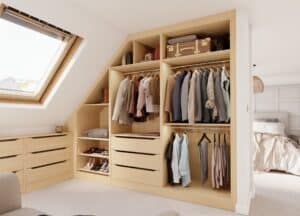
The Finishing Touches That Elevate the Whole Experience
The difference between a wardrobe that looks nice and a wardrobe that feels amazing to use usually comes down to the smaller features.
Pull-out laundry baskets are a brilliant addition if you want to stop clothes gathering on the floor. Pull-out racks for belts, ties, or scarves make those items easy to find without turning drawers into a tangle.
Jewellery trays and accessory inserts help you keep the small items neat and visible, which makes getting ready feel smoother.
Soft-close drawers and doors might sound like a minor detail, but they make the wardrobe feel more refined and reduce everyday wear and tear. A mirror panel can also save space in the room while making the wardrobe feel like a proper dressing area.
These finishing touches don’t have to be over the top; adding just one or two can make the entire setup feel more effortless.
A Final Sense Check Before You Commit
Before you lock in a design, it’s worth doing one last mental walk-through of your daily routine.
Picture getting ready on a busy morning and ask whether your most-used items are easy to grab, whether your folded items have proper drawer space, and whether shoes and accessories have a clear home. A bespoke wardrobe should reduce friction, not add more steps to your day.
When the layout, rails, drawers, shelving, shoe storage, and lighting are planned as one complete system, you don’t just end up with more storage. You end up with better storage, where everything feels intentional and easy. That’s the real value of bespoke: not just fitting your belongings, but fitting your lifestyle too.
Should you like any more information on our ranges of bespoke wardrobes and interiors, then please don’t hesitate to contact our team at Fraser James Blinds. We are professional, yet friendly, and always on hand to help. Alternatively, you can also arrange a home visit at a time that works best for you.