Shutters vs Venetian Blinds: Everything You Need to Know
If you’ve ever sat scrolling through home inspiration photos thinking, “Do I go for shutters or Venetian blinds?” you’re definitely not alone.
It’s one of those decisions that feels small at first, but actually changes how your room looks, feels and even how warm it stays in winter. Both shutters and Venetian blinds are popular in UK homes, both are stylish, and both do a great job with light and privacy. But they suit slightly different lifestyles and tastes.
This guide walks you through the key differences in a relaxed, real-world way so you can make a choice that actually fits how you live – not just what looks good in a glossy photo.
Shutters vs Venetian Blinds: What’s the Real Difference?
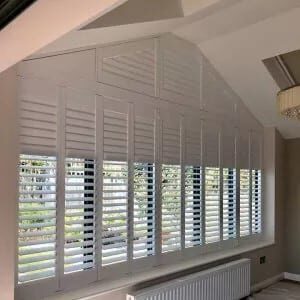
Shutters are usually made-to-measure panels that are fitted directly to your window frame. They are most often made from wood or composite materials and feel like a built-in feature of your home. When you see shutters on a window, they tend to look as if they have always belonged there. They bring structure, solidity and a sense of permanence to a room.
Venetian blinds, by contrast, are made from horizontal slats that can be tilted or raised. They might be wood, faux wood, aluminium or PVC. Rather than being part of the architecture, they sit within or over the window recess and feel lighter and more flexible. If you like the idea of changing your look every so often, Venetians can be easier to swap out.
In everyday terms, shutters are the “investment” option that feels built-in and long term, while Venetian blinds are the “versatile” option that gives you a lot of control and flexibility without feeling quite so permanent.
How Each Option Changes the Look of Your Room
Shutters are brilliant if you love a classic, timeless style. They work beautifully in period homes, bay windows and modern country interiors.
When you fit shutters in a living room or bedroom, they instantly make the space feel more grown-up and finished. From outside, they also add kerb appeal, which is never a bad thing.
Venetian blinds give a different kind of character. Wooden or faux-wood Venetians can still look premium and substantial, but they have a softer presence than shutters. They suit rooms where you already have a lot going on visually – bold wallpaper, colourful furniture or statement art – and you want the window treatment to complement everything rather than steal the show.
If you lean towards a minimalist or contemporary style, slim aluminium Venetians can be incredibly effective. In home offices, kitchens and modern flats, they offer a clean, streamlined look that still feels stylish without being fussy.
Light and Privacy: Living with Them Day to Day
Both shutters and Venetian blinds shine when it comes to controlling light and privacy, but they do it in slightly different ways.
With shutters, you get soft, filtered daylight when the louvres are tilted. This creates a calm, even light that feels very comfortable on the eyes.
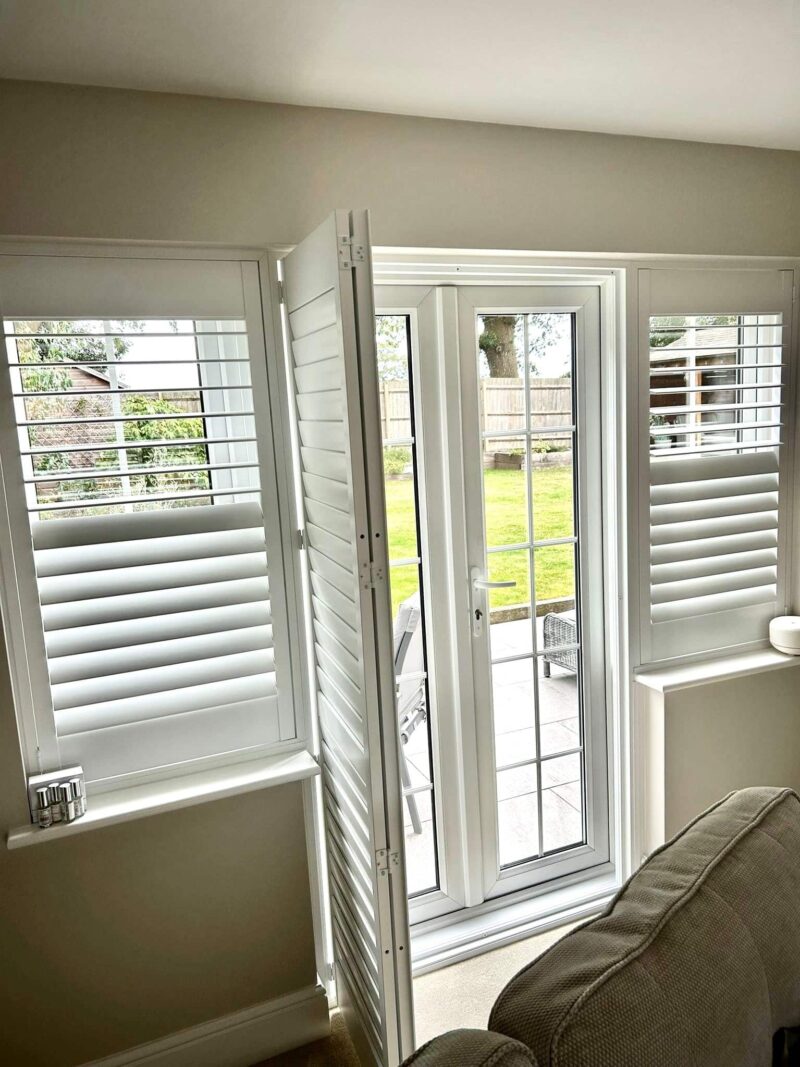
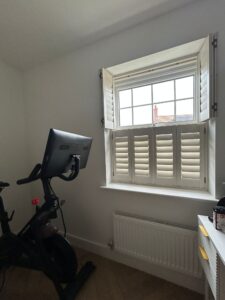
In street-facing rooms, café-style shutters on the bottom half of the window are a great solution. They let you enjoy daylight from the top of the window while keeping prying eyes firmly out of your space at pavement level.
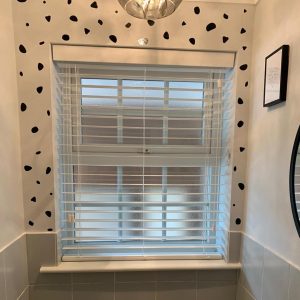
Venetian blinds offer very fine control. Because you can tilt the slats up, down or leave them flat, you can adjust them to suit different times of day with almost surgical precision.
On dull days, you can angle the slats to maximise light, and on bright afternoons you can cut glare without turning the room dark. You can also pull them right up if you want an uninterrupted view, which some people love in kitchens and living rooms.
In reality, both options work well for bedrooms, living rooms and home offices. If you use screens a lot, you’ll appreciate the way both shutters and Venetians let you tame glare. The decision comes down to whether you prefer the softer, architectural feel of shutters or the ultra-adjustable nature of Venetians.
Warmth, Draughts and Energy Efficiency
With energy bills on everyone’s mind, it’s worth thinking about how each option performs when the temperature drops.
Shutters tend to be the stronger performer for insulation. Because they are solid and fitted tightly to the window frame, they create an extra layer between your room and the cold glass. When you close them on winter evenings, they help to trap warm air inside and reduce draughts.
This can make a noticeable difference in older homes or on particularly chilly windows.
Venetian blinds still help, especially when you choose thicker faux-wood slats, but by their very design they leave more gaps for air to circulate. They contribute to comfort, but they do not create the same “sealed” effect you get with shutters. That said, when Venetians are combined with well-fitted curtains, they become part of an effective insulating combination.
If you work from home, have a cold front room or simply hate feeling a draught, shutters are the more efficient choice. If your house is already fairly well insulated and you just want a practical, good-looking solution, Venetians still do a decent job.
Cleaning and Maintenance in Real Life
Nobody buys window dressings because they’re excited about cleaning them, but it’s worth knowing what you’re signing up for.
Shutters are generally straightforward to clean. The louvres tend to be wider than Venetian slats, which makes them quicker to dust. A soft cloth or microfibre duster run along each slat now and again is usually enough. Quality shutters are often finished in durable, wipeable paints or coatings, so occasional spot-cleaning of fingerprints is easy.
Venetian blinds require a bit more patience because of the number and narrowness of the slats. Wooden and faux-wood Venetians are still manageable, and many homeowners get into a rhythm of a quick dust every week or two. Slim aluminium blinds, however, can feel a little more fiddly if you let the dust build up.
If you already know that cleaning is not your favourite task, it makes sense to look for wider slats and smooth, easy-wipe finishes on whichever option you choose. That way, maintenance feels like a quick job, not a full afternoon project.
Budget, Cost and Long-Term Value
Price is often the moment where people feel torn, because shutters and Venetian blinds sit in different price ranges.
Shutters usually involve a higher upfront cost. They are bespoke, made-to-measure products that use solid materials and need expert fitting. The upside is that they tend to last many years and become part of the home.
Many homeowners see them as a small renovation rather than just a decorative purchase and like the idea that they can add perceived value when it comes time to sell.
Venetian blinds are generally more budget-friendly. The price varies depending on material, with faux wood and aluminium often costing less than premium hardwood, but even at the higher end they are usually cheaper than shutters.
This makes them ideal for dressing several windows at once or when you are working to a set budget. They are also attractive if you like the idea of updating your window treatments every so often, rather than committing for the long haul.
In simple terms, shutters feel like a long-term investment, while Venetian blinds give you more financial flexibility and freedom to change your mind.
Which Rooms Suit Shutters and Venetians Best?
In living rooms, shutters often take the lead. They frame large windows beautifully, bring a sense of structure and look impressive from the street. If you love that curated, magazine-worthy feel, shutters can be the finishing touch that pulls the whole room together.
In bedrooms, both options work well. Shutters create a calm, contained feel and can make the room feel like a cosy retreat at night. Venetians are brilliant if you like layering, because they pair effortlessly with curtains. The blinds handle the practical job of light control, while the curtains bring in softness, pattern and extra warmth.
In kitchens and bathrooms, practicality comes first. Moisture-resistant faux-wood shutters and Venetians are both strong contenders here. Shutters look fantastic in bay windows and above sinks, giving a clean, classic look. Venetians are very handy where you need privacy but still want daylight, such as in overlooked bathrooms or side windows.
In home offices, both options do a good job of controlling glare on screens. Shutters can make the space feel more like a multi-purpose room, especially if it doubles as a guest room, while Venetians give a slightly more relaxed, functional vibe that works well for everyday workspaces.
How Permanent Do You Want Your Choice to Be?
Shutters are a little like fitted wardrobes. They are designed specifically for your windows and, once installed, they are not something you easily swap out. If you enjoy choosing a style and then living with it happily for years, this permanence is a big plus. It brings a sense of confidence and stability to your décor.
Venetian blinds sit at the other end of that spectrum. They still benefit from being made-to-measure and professionally fitted, but if you redecorate, move house or simply fancy a new look, they are much easier and cheaper to change. For people who enjoy refreshing their interiors every few years, that flexibility is reassuring.
Thinking about your own personality can actually help here. If you are a “pick it once and forget about it” type of person, shutters will feel very satisfying. If you often move furniture around, repaint walls and experiment with new looks, Venetians will fit better with that mindset.

Bringing It All Together
There is no single right answer in the shutters versus Venetian blinds debate. Instead, there is the option that best matches your home, your budget and your lifestyle.
Shutters are ideal if you want a solid, architectural, insulating and long-lasting feature that earns its place as a core part of your room. Venetian blinds are perfect if you want style, flexibility, detailed control over light and a bit more freedom with cost and future changes.
The easiest way to decide is to picture an ordinary day in your home. Think about the times you are working, relaxing, watching TV, getting the kids to bed, or having a quiet coffee on a winter morning. Then ask yourself which option would make those moments feel more comfortable, more private and more “you”. When you look at it that way, the right choice usually starts to stand out very clearly.
If you would like any more information about our ranges of shutters, or any of our other product ranges, such as blinds and awnings, then please feel free to contact the Fraser James Blinds Team. Alternatively you can also arrange a home visit at a time that works best for you.