How to Clean Blinds Properly (Without Warping or Staining)
Blinds are deceptively simple: a few slats, a headrail, maybe a fabric panel. But most cleaning mishaps happen for the same reason – we treat every blind like it’s the same material.
Too much water can swell timber, seep into fabric backings, or pool in honeycomb cells. Strong cleaners can leave tide marks, bleach patches, or strip protective finishes. And aggressive scrubbing can bend aluminium slats or roughen faux-wood coatings so they attract dirt faster next time.
The good news is that “properly” doesn’t mean complicated. It means matching the method to the blind type, using minimal moisture, and drying quickly and evenly so nothing warps, stains, or smells damp afterwards.
Start with the golden rules (they prevent 90% of damage)
Before you touch water, dust first. Wet cleaning on top of dust makes a gritty paste that smears and scratches finishes.
Always support slats as you clean so you’re not pulling them out of shape. And if you’re using any cleaner (even mild washing-up liquid), test a small hidden area first – some finishes react badly to vinegar, solvents, or anything “degreasing”.
The other big rule is moisture control. The safest approach is “damp, not wet”: microfibre cloths that are wrung out thoroughly, light passes rather than soaking, and immediate drying with a second cloth.
If you remember nothing else, remember this: blinds hate standing water.
Know what you’re cleaning (quick material check)
If you’re unsure what type you have, a quick check saves a lot of grief.
Real wood usually has visible grain and feels warmer; faux wood is heavier than aluminium and has a smooth, sealed feel. Aluminium slats are light and can kink if you press too hard.
Fabric blinds (roller, Roman, pleated) often have a stiffened backing that doesn’t like saturation. Honeycomb/duette-style shades have internal cells where water can hide. Vertical blinds can be PVC or fabric; both clean differently.
If you have the packaging or manufacturer care guide, use it – especially for coated fabrics or specialty finishes – but even without it, the method below will keep you on the safe side.

Your basic kit (simple, safe, and non-scratch)
A microfibre duster or cloth is your best friend because it traps dust rather than flicking it into the air. A vacuum with a soft brush attachment helps with textured blinds and fabric.
A small bowl of lukewarm water with a drop of mild washing-up liquid is usually enough for spot cleaning. Keep a second bowl of plain water for “rinse wiping” if needed, and have dry microfibre cloths ready for immediate drying.
Avoid abrasive sponges, bleach, ammonia-heavy cleaners, and heavy steaming unless the blind type specifically allows it. Steam can soften adhesives and warp timber or distort certain plastics.
The weekly routine that stops build-up (and makes deep cleans easy)
A quick dust once a week prevents that greasy, sticky film that later turns into stains.
Close the blinds so the slats form a flat surface facing you, then dust from top to bottom using gentle, consistent strokes. After that, rotate the slats the other way and repeat. This two-angle approach catches the edges where dust loves to sit.
If you’ve got pets, a busy kitchen, or windows that are often open, you’ll notice dust comes back faster – in those homes, a quick vacuum with the brush attachment every week or two can be even more effective than dry wiping alone.
Deep cleaning Venetian blinds (aluminium) without bending them
Aluminium blinds are durable, but they bend easily if you press or pinch.
Start by fully lowering the blind and locking it in place so it doesn’t swing. Close the slats, then support them lightly with one hand behind the cloth as you wipe. Use a barely damp microfibre cloth with a tiny amount of mild soapy water, and work in smooth strokes rather than scrubbing.
The key to avoiding streaks is rinsing and drying. If you used any soap, do a second pass with a cloth dampened in clean water (again, wrung out well), then immediately dry with a fresh cloth. Don’t let water drip into the headrail – it can affect the mechanisms and attract grime.
Deep cleaning faux-wood blinds without dulling the finish
Faux-wood blinds are forgiving, but they can still stain if cleaner residue is left behind, especially on lighter colours. Dust first, then wipe with a cloth dampened in mild soapy water. If there’s kitchen grease, go slowly: several light passes remove film better than one hard scrub (hard scrubbing can micro-scratch the surface and make it look permanently “chalky”).
Once the marks lift, wipe again with a clean damp cloth to remove any soap residue, then dry thoroughly. Pay attention to the bottom rail and the areas near cords where hands often touch – that’s where body oils and residue build up.
Cleaning real wood blinds without warping them
Real wood needs the gentlest approach because warping happens when moisture is absorbed unevenly.
Treat it like furniture. Start with dry dusting or vacuuming using a soft brush. For marks, use a slightly damp cloth (almost dry) and wipe quickly along the grain. Avoid soaking any section, and never wash wood blinds in a bath or shower.
Dry immediately, then leave the slats open for airflow so any trace moisture evaporates evenly. If you want extra protection, a small amount of wood-safe polish on a cloth (not sprayed directly on the blinds) can restore shine and help repel dust – but only use products designed for finished wood, and keep them away from fabric tapes.
Fabric roller and Roman blinds without tide marks
Fabric blinds are where staining mistakes happen fastest. Most aren’t meant to be saturated, and some have backings that can bubble or separate if they get too wet.
Start with vacuuming using the brush attachment, working gently from top to bottom. For spot marks, use a cloth barely dampened with a mild soapy solution and dab – don’t rub. Rubbing pushes the stain outwards and creates a ring.
After dabbing, blot with a clean cloth dampened with plain water to lift any soap, then blot dry. Finally, let the blind hang fully down and dry with good ventilation. Avoid drying in direct heat (like a radiator) because it can shrink or distort some fabrics.
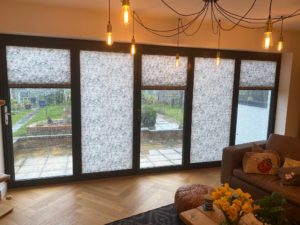
Vertical blinds: PVC vs fabric panels
PVC verticals can be wiped much like faux wood: dust, then wipe with mild soapy water, rinse-wipe, and dry.
Fabric verticals are closer to roller blinds: vacuum first, then spot-clean by dabbing rather than rubbing. If you remove fabric vanes to clean them, check if they’re machine washable – many aren’t, and washing can crease them permanently or distort the weighting at the bottom.
If you do remove any panels, make sure they go back completely dry. Hanging slightly damp fabric can leave water lines and may encourage mildew, especially in cooler rooms.
Honeycomb/pleated shades: the “don’t flood the cells” rule
Honeycomb shades are brilliant for insulation, but their internal cells trap moisture.
That means heavy wet cleaning can cause water spots you can’t easily reach, or even mild mould if moisture lingers. Vacuum gently with a brush attachment or use a dry microfibre cloth for regular care.
For small marks, use minimal moisture and dab only the surface. If water gets into the cells, it can leave visible spotting once it dries. Good ventilation and patience help, but prevention is far easier than rescue with this type.
Stain and grime troubleshooting (without making it worse)
Grease (common in kitchens) responds best to mild soap and repeated light wiping.
Avoid strong degreasers unless the blind material is clearly compatible, because they can strip finishes or leave discolouration. Nicotine film can be stubborn and often needs multiple passes; again, mild soap plus patience is safer than harsh chemicals.
For mildew on non-porous materials like PVC or aluminium, a lightly damp cloth with mild soapy water is the first step. If you need something stronger, a very diluted white vinegar solution can help on some materials, but never use it on real wood and always patch test – some coatings react badly and can lighten or streak.
Drying and aftercare: where warping is prevented
Drying isn’t the final step – it’s the protective step.
Always finish with a dry cloth, and then open the slats slightly to let air circulate. If you’ve cleaned near the headrail, check for hidden moisture around cords and brackets. In bathrooms or kitchens, run an extractor fan or open a window so damp air doesn’t linger around freshly cleaned blinds.
To keep blinds cleaner for longer, reduce the “stickiness” in the room: use a cooker hood while frying, wipe condensation from window frames, and keep a regular dusting rhythm. A little prevention means you rarely need heavy cleaning.
A simple schedule that keeps blinds looking new
Most homes do well with a weekly or fortnightly dust and a deeper clean every couple of months.
Kitchens and bathrooms may need more frequent spot checks, while bedrooms often stay cleaner longer. If you keep it light but consistent, you’ll avoid the big “soaked and scrubbed” sessions that cause warping, staining, and frustration.
Final thoughts: gentle, minimal moisture, quick dry
Cleaning blinds properly is less about elbow grease and more about restraint.
Dust first, use the least moisture that will do the job, support the slats, and dry straight away. When you match the method to the material, blinds stay crisp, flat, and bright – without those annoying water marks, warped slats, or dull patches that make them look older than they are.
If you would like any additional information about our ranges of blinds and shutters, then please don’t hesitate to contact us. We are professional, friendly and always on hand to help. Alternatively, you can also arrange a home visit.