Bay Window Blinds and Shutters: What Works Best?
Bay windows are one of those home features that people tend to fall in love with straight away.
They bring in plenty of natural light, make a room feel bigger and can turn an otherwise ordinary wall into a real focal point.
The only problem? Dressing them can be a little more complicated than choosing a blind for a standard rectangular window.
With several panes, different angles and sometimes limited space between frames, bay windows need a bit more thought. The right window covering should look good, work smoothly and give you the level of privacy, light control and insulation you actually need.
So, what works best for a bay window: blinds, shutters or a combination of both?
The answer depends on the style of your home, how you use the room and what you want from the finished look.
Why Bay Windows Need a Different Approach
A bay window is usually made up of three or more individual window sections, often with one large central pane and two angled side windows. Some are fairly shallow, while others project much further out from the building and create space for a seat, desk or storage.
That shape is exactly what makes bay windows so attractive, but it can also make fitting window coverings more challenging.
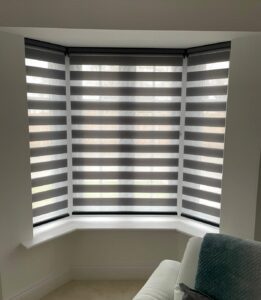
A single wide blind is rarely the best solution because it can interfere with the angles of the bay and may prevent windows from opening properly. Instead, each section will often need its own blind or shutter panel.
Accurate measuring is particularly important. Even a small difference in the angle or position of a window frame can affect how neatly blinds sit next to each other.
This is where made-to-measure blinds and shutters really come into their own.
Roller Blinds: Simple, Practical and Uncomplicated
Roller blinds are one of the simplest ways to dress a bay window.
Each window can have its own individual blind, allowing you to open and close different sections independently. That can be especially useful if sunlight enters the room from different directions throughout the day.
For example, you might want to lower the blind on one side of the bay to block glare from a television screen while leaving the other windows completely open.
Roller blinds are also available in a huge choice of colours, patterns and fabrics, so they can work with almost any interior style.
Blackout roller blinds can be useful in bedrooms, while moisture-resistant fabrics can work well in kitchens.
One thing to consider is the small gaps that may appear between separate roller blinds. This usually is not a major issue, but homeowners looking for complete privacy or blackout performance may want to explore other options.
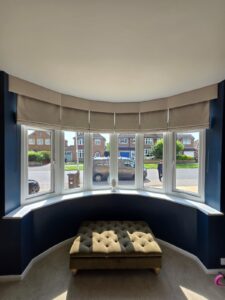
Roman Blinds: A Softer, More Decorative Look
If you want your bay window to feel warm and luxurious, Roman blinds are worth considering.
Made from soft fabric that folds neatly when raised, Roman blinds can introduce colour, texture and pattern without overwhelming the architecture of the window.
They work particularly well in living rooms, bedrooms and dining spaces where appearance is just as important as practicality.
As with roller blinds, each section of the bay would normally have its own blind. When properly measured and fitted, the individual blinds can sit neatly alongside each other.
Roman blinds can also be made using thermal or blackout linings, helping to improve comfort during colder months or darker evenings.
The main consideration is space. Because Roman blinds form folds when raised, they can take up slightly more room at the top of the window than slimline options such as roller or Venetian blinds.
Venetian Blinds: Excellent Light Control
One of the biggest advantages of Venetian blinds is control.
Rather than simply choosing between open and closed, the horizontal slats can be tilted to change how much sunlight enters the room.
This makes them particularly useful for bay windows facing busy streets.
You can angle the slats to let natural light into the room while making it more difficult for people outside to see directly inside.
Wooden Venetian blinds can create a warmer, more traditional appearance, while aluminium designs often suit contemporary homes.
The ability to adjust each section of the bay individually also means you can respond to changing sunlight throughout the day.
However, Venetian blinds do require regular dusting, particularly if the bay window is large and contains several separate blinds.
Vertical Blinds: Better Than You Might Think
Vertical blinds sometimes get unfairly associated with offices, but modern designs can look much more stylish than older versions.
They can be particularly useful for very large bay windows or floor-to-ceiling glazing.
The vertical louvres can rotate to control sunlight and privacy, while the blinds can also be drawn back to reveal the full window.
Fabric choices have also improved dramatically, with everything from subtle neutral finishes to textured materials and bold colours available.
For a traditional Victorian or Edwardian bay window, vertical blinds might not always be the first choice. For large contemporary bays, though, they can be surprisingly practical.
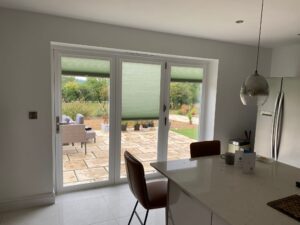
Pleated and Cellular Blinds: Neat and Energy Efficient
Pleated blinds are another option that works particularly well in awkward window spaces.
Their lightweight design means they can sit close to the glass without taking up much room.
Cellular blinds, sometimes known as honeycomb or duette blinds, take this idea one step further. Their internal honeycomb structure traps pockets of air, helping to reduce heat transfer through the glass.
That can be helpful because bay windows often contain a large amount of glazing.
During colder autumn and winter months, thermal window coverings can make rooms feel more comfortable and may reduce some of the heat loss around the window area.
They also have a clean, understated appearance, making them suitable for modern interiors.
Plantation Shutters: The Classic Bay Window Choice
When people picture beautifully dressed bay windows, shutters are often the first thing that comes to mind.
There is a good reason for that.
Plantation shutters are made to fit the individual sections of the window, meaning they can follow the shape of the bay incredibly closely.
Rather than hiding the architecture, they tend to emphasise it.
The adjustable louvres also provide excellent control over light and privacy.
You can tilt them slightly to reduce glare, close them completely for privacy or open the panels to reveal the entire window.
For homes facing pavements or busy roads, shutters can be especially useful because they allow you to maintain privacy without blocking natural daylight completely.
Café Style Shutters for Street-Facing Bays
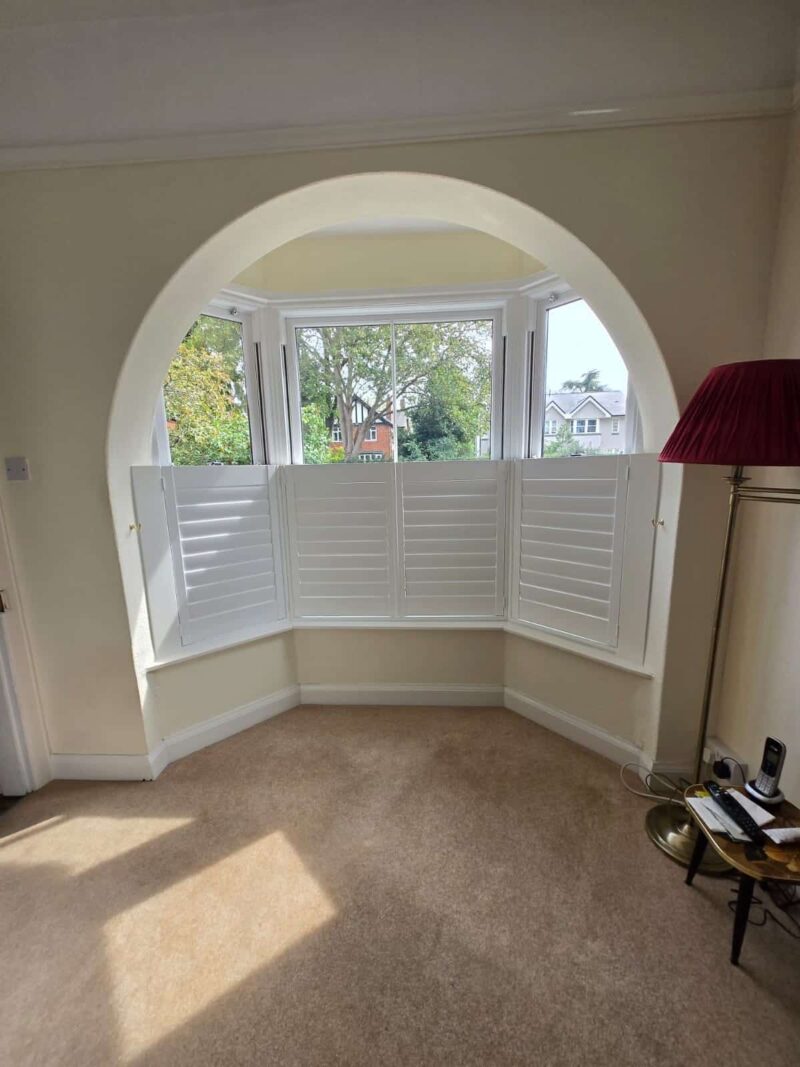
Café style shutters cover only the lower section of the window.
This can be a great option for ground-floor bay windows overlooking a street or neighbouring property.
The lower section gives you privacy where it is needed most, while the top part of the window remains uncovered and allows daylight to flood into the room.
The result can feel lighter and more open than full-height shutters.
Café style shutters also suit period properties particularly well, helping to maintain the character of Victorian and Edwardian bay windows.
Full-Height Shutters for Maximum Flexibility
Full-height shutters cover the entire window and provide greater privacy and light control.
They can work particularly well in bedrooms, living rooms and front-facing rooms where privacy becomes more important in the evening.
Many full-height shutter designs also include a mid-rail.
This allows the upper and lower louvres to move independently.
You might keep the lower section closed for privacy while tilting the upper section open to let daylight into the room.
That flexibility is one of the main reasons shutters remain such a popular choice for bay windows.
Can You Combine Curtains with Blinds or Shutters?
Absolutely.
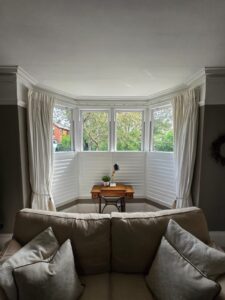
In fact, layering window coverings can make a bay window look particularly impressive.
Blinds or shutters provide the practical control over privacy and sunlight, while curtains add softness, texture and warmth.
You might choose neutral shutters with long curtains positioned around the outside of the bay, for example.
The curtains do not necessarily need to close across the entire window. Sometimes they are used mainly to frame the bay and make it feel more luxurious.
Roman blinds can also be paired with curtains for a softer, traditional look.
Just make sure there is enough space for curtain poles or tracks without interfering with the operation of the blinds or shutters.
Think About How You Use the Bay
Before deciding between blinds and shutters, think about what happens around the window itself.
If you have a window seat, bulky blinds that hang into the seating area may be inconvenient.
If the bay contains a desk, you may need strong glare control for computer screens.
If it faces the road, privacy may be the priority.
And if the room becomes cold during winter, thermal performance could influence the choice.
There is no single option that works perfectly for every bay window. The best solution should match the way you actually use the space.
Measuring Matters More Than You Might Expect
Bay windows can look perfectly symmetrical while still having surprisingly different angles between each section.
This is why professional measuring can make such a noticeable difference.
If blinds are too wide, they may collide when lowered. If they are too narrow, gaps can appear between sections.
Shutters also require accurate measurements so panels open correctly and frames sit neatly against the window.
Made-to-measure products are usually worth considering for bay windows because they are designed around the exact shape of the space rather than forcing standard sizes to fit.
So, Are Blinds or Shutters Better?
Both can work extremely well.
Blinds are usually the more flexible option when it comes to colours, fabrics, patterns and budgets. Roller, Roman, Venetian and pleated blinds can all create very different looks while offering practical light control.
Shutters tend to provide a more permanent architectural finish. They are particularly effective for privacy, adjustable light control and highlighting the shape of the bay itself.
For some homes, the best answer might even be a combination of shutters or blinds with curtains.
The important thing is to choose window coverings that complement the proportions of the bay rather than fighting against them.
A bay window is already one of the standout features of a room. With carefully fitted blinds or shutters, it can become an even stronger part of the overall design while still being comfortable and practical every day.
Should you like any more information about our ranges of blinds and shutters, then please don’t hesitate to contact us. We are professional, friendly and always more than happy to help. Alternatively, you can also arrange a home visit at a time that works best for you.
You may also be interested in...
5 Stylish Alternatives to Plain Roller Blinds
Read More
A Comprehensive Guide to Maintaining Your Investments in Blinds and Shutters
Read More
An In-Depth Look at Shaped Window Shutters
Read More
Are All Shutter Styles the Same? Exploring the Subtle Differences That Define Window Shutters
Read More